

Services
Minimally Invasive Dentistry
A conservative approach focused on preserving healthy natural tooth structure while treating decay, cracks, and other damage.
Service Overview
Why Preserve Natural Tooth Structure?
Minimally invasive dentistry is an approach that focuses on preserving as much healthy natural tooth structure as possible while treating decay, cracks, and other damage. At San Diego Bay Dental in Chula Vista, CA, Dr. Madison Brown uses conservative treatment options such as dental onlays when appropriate to restore damaged teeth without removing more tooth structure than necessary.
Using tools such as digital x-rays and an iTero Digital Scanner, our team carefully evaluates each tooth and explains your treatment options before moving forward. If you have a large filling, cracked tooth, or other dental damage, an onlay may provide a durable alternative to a larger restoration.

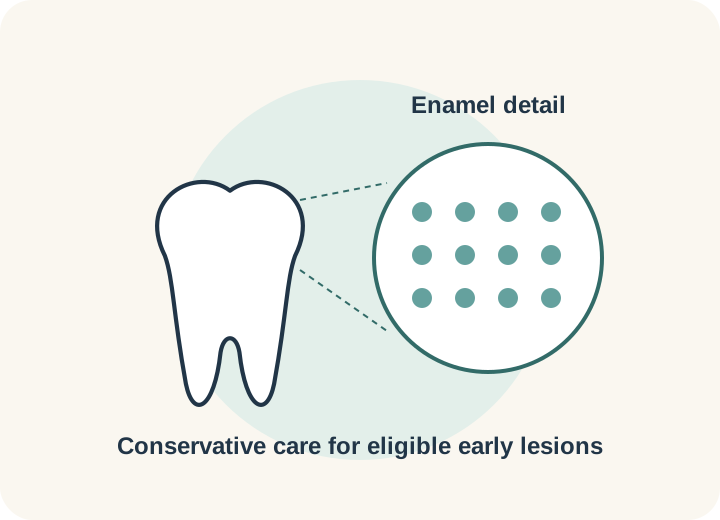
Healthy enamel and dentin help give your teeth strength and stability. When dental treatment is needed, preserving as much of that natural structure as possible can help maintain the tooth while avoiding unnecessary removal of healthy tissue.
At San Diego Bay Dental, treatment begins with a careful evaluation. Dr. Madison Brown may use a visual examination, digital x-rays, and iTero scans to assess the condition of your tooth and determine whether a filling, onlay, crown, or another treatment is appropriate.
The goal is simple: repair the problem while keeping as much of your natural tooth as possible.
What Is a Dental Onlay?
A dental onlay is a custom restoration used to repair a tooth with more damage than a traditional filling can reliably restore, but that may not require a full dental crown.
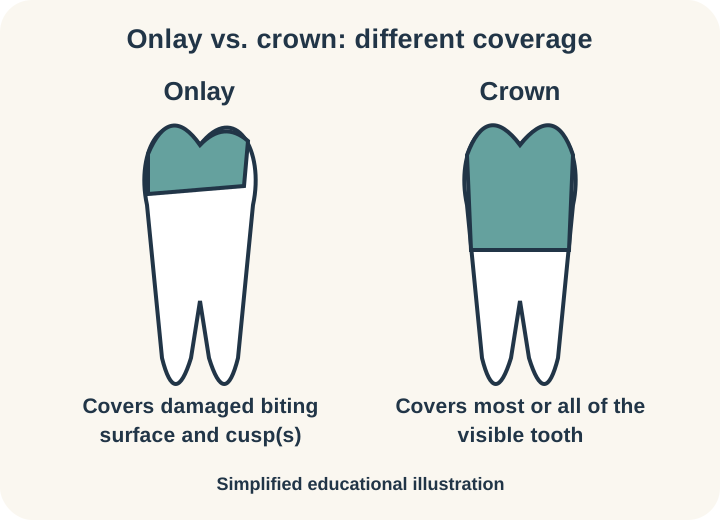
Unlike a crown, which covers most or all of the visible portion of a tooth, an onlay replaces only the damaged or weakened areas. This makes onlays a useful option in minimally invasive dentistry because they can restore function while preserving more healthy tooth structure.
When Is an Onlay Recommended?
An onlay may be recommended when:
- A tooth has a large area of decay that is too extensive for a filling
- A cusp or portion of the tooth has fractured
- An existing large filling has weakened the remaining tooth
- Enough healthy tooth structure remains that a full crown may not be necessary
Every tooth is different, so the right restoration depends on the extent of the damage, the tooth’s location, your bite, and the condition of the remaining enamel and dentin.
KöR Whitening and Invisalign
KöR Whitening can be part of a conservative smile plan alongside Invisalign. Aligning the teeth and whitening natural enamel may address smile goals without veneers or crowns when those restorations are not needed. Dr. Brown evaluates your teeth, gums, and sensitivity and plans the timing of each treatment. Whitening trays and aligners serve different purposes; use whitening gel only in the trays and manner our team recommends.
Onlays vs. Fillings and Crowns
Fillings, onlays, and crowns all restore damaged teeth, but they differ in how much of the tooth they replace.
A filling is generally used for smaller areas of decay or damage. An onlay covers a larger portion of the tooth and may include one or more cusps while leaving healthy areas intact. A crown covers most or all of the visible portion of the tooth and may be recommended when there is more extensive damage or weakness.
When an onlay is appropriate, it can provide a strong restoration without requiring the amount of tooth preparation typically needed for a full crown. Learn more about dental crowns and other restorative options.
How Digital Imaging Supports Conservative Care
Accurate imaging helps us understand the condition of a tooth before recommending treatment.
Digital x-rays can reveal decay and other concerns that may not be visible during a visual examination. The iTero Digital Scanner captures detailed images of your teeth and bite without the need for traditional putty impressions in many cases.
These tools help Dr. Madison Brown evaluate your tooth, plan your restoration, and design an onlay that fits comfortably with your bite.
What to Expect During Onlay Treatment
Your visit will depend on the condition of your tooth and how your restoration is created, but treatment commonly includes:
- Local anesthesia to keep you comfortable
- Removal of damaged, decayed, or weakened tooth structure
- A digital scan or impression of the prepared tooth
- Placement of a temporary restoration when needed
- Final placement and adjustment of the completed onlay
Some onlays may require more than one appointment. Dr. Madison Brown will explain the process and what to expect based on your individual treatment plan.
Caring for a Dental Onlay
Dental onlays are cared for much like your natural teeth. Brush twice a day, floss around the restored tooth, and maintain regular dental checkups so our team can monitor the restoration and surrounding tooth structure.
Avoid chewing on hard non-food objects, and let us know if you notice any new sensitivity, discomfort, or changes in your bite.
Consistent preventive care can help protect both your restoration and your natural teeth over time.
Schedule a Minimally Invasive Dentistry Consultation in Chula Vista
If you have a cracked tooth, a large filling, persistent sensitivity, or another damaged tooth, Dr. Madison Brown can evaluate your options and determine whether an onlay or another conservative treatment is appropriate.
At San Diego Bay Dental in Chula Vista, we focus on preserving healthy tooth structure whenever possible while restoring comfortable function and appearance. Call San Diego Bay Dental today or request an appointment online to learn which treatment option is right for your tooth.
Contact San Diego Bay Dental
Call our Chula Vista office or request an appointment online to discuss your questions with our team.
Related Services
View All Services
Let’s Get Started
Your Next Visit Starts With One Call
Reach out to schedule your visit with Dr. Brown, or send us a message, and our team will get back to you.