

Services
TMJ & Bruxism Treatment in Chula Vista, CA
Conservative evaluation and treatment for jaw pain, clenching, teeth grinding, and related discomfort.
Service Overview
What Are TMJ Disorders and Bruxism?
Jaw pain, frequent headaches, clicking or popping, and sore teeth in the morning can all make daily life uncomfortable. At San Diego Bay Dental, Dr. Madison Brown and our team provide TMJ and bruxism treatment in Chula Vista with a focus on careful evaluation, clear explanations, and conservative care.
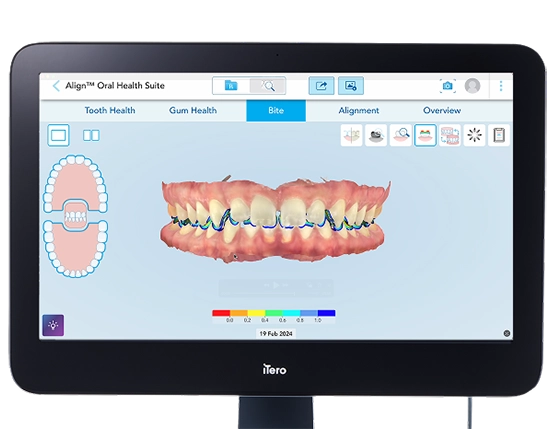
We look closely at your symptoms, bite, jaw movement, and muscle tenderness to understand what may be contributing to your discomfort. Digital x-rays and the iTero Digital Scanner can help us evaluate your teeth, bite, and surrounding structures while creating accurate records for future comparison.
Our goal is to help relieve discomfort, protect your teeth, and improve comfortable jaw function with a treatment plan designed around your individual needs.

TMJ refers to the temporomandibular joint, which connects your lower jaw to your skull. Conditions affecting the joint, jaw muscles, or jaw movement are often referred to as temporomandibular disorders, or TMD.
Bruxism is the involuntary grinding or clenching of the teeth. It may happen while you are asleep or during the day. Over time, grinding and clenching can contribute to worn enamel, tooth sensitivity, headaches, jaw soreness, and muscle fatigue.
TMJ-related symptoms and bruxism can occur separately or at the same time, which is why a thorough evaluation is important before recommending treatment.
What Causes Jaw Pain and Teeth Grinding?
Jaw discomfort and teeth grinding can have several contributing factors. Muscle tension, clenching, changes in the way the teeth meet, missing teeth, sleep problems, and certain daily habits may all play a role.
Stress may also contribute to clenching or grinding for some patients. Other habits, including nail-biting, frequent gum chewing, or prolonged forward-head posture, may place additional strain on the jaw muscles.
Problems within the jaw joint may also be associated with symptoms such as clicking, popping, locking, or limited movement.
During your evaluation, we may ask about your sleep quality, caffeine intake, medications, daily habits, and stress levels to better understand patterns that could be affecting your symptoms.
How Are TMJ Disorders and Bruxism Diagnosed?
Diagnosis begins with a focused discussion of your symptoms and health history. Dr. Madison Brown evaluates jaw movement, muscle tenderness, bite relationships, and areas of tooth wear.
Digital x-rays can help us evaluate the teeth and surrounding structures for dental problems that may be contributing to your symptoms. The iTero Digital Scanner allows us to capture detailed digital records of your bite and tooth alignment.
Your evaluation may also include:
- Jaw range-of-motion testing
- Muscle palpation
- Bite analysis
- Review of grinding or clenching habits
- Evaluation of tooth wear
- Discussion of sleep and stress patterns
In some cases, a trial appliance may be recommended to monitor changes in comfort, jaw movement, and wear patterns over time.
How Are TMJ Problems and Bruxism Treated?
Treatment depends on the source and severity of your symptoms. At San Diego Bay Dental, we generally begin with conservative options designed to reduce discomfort, protect the teeth, and support comfortable jaw function.
Sleep screening and testing when appropriate
Nighttime clenching or grinding can occur alongside sleep-related breathing concerns, but bruxism alone does not establish sleep apnea. If you also snore, wake gasping, have witnessed breathing pauses, or feel unusually sleepy during the day, tell our team. We can review your sleep history and screen for possible risk, then coordinate a referral to a physician or sleep specialist for a home sleep apnea test or an overnight sleep study when appropriate. A standard nightguard protects teeth; it is not a treatment for sleep apnea. Learn about our sleep apnea screening and oral sleep appliances.
Custom nightguards
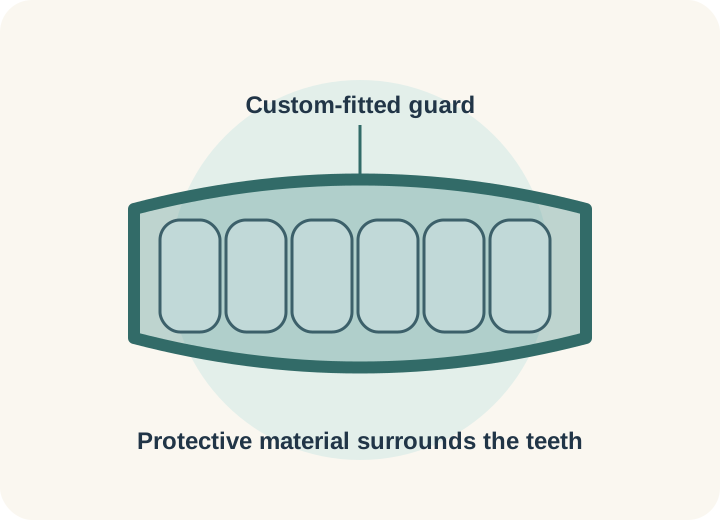
A custom nightguard can help protect tooth enamel from the effects of nighttime grinding and clenching. Custom appliances are adjusted for comfort and fit based on your individual bite.
Bite adjustments
In select cases, specific tooth contacts may contribute to uneven bite forces or discomfort. Small adjustments may be considered when Dr. Madison Brown determines they are appropriate for your situation.
Physical therapy referral
Physical therapy may help improve jaw mobility, reduce muscle tension, and address movement patterns that contribute to discomfort. When appropriate, we can coordinate care with a physical therapist.
Behavioral strategies
Awareness of daytime clenching, changes in sleep habits, stress-management strategies, and reducing habits that strain the jaw may also help manage symptoms.
When dental problems affect the way your teeth meet, targeted restorative treatment may be recommended to improve bite contacts and long-term function.
Can a Nightguard Help With Teeth Grinding?
A custom nightguard can help protect your teeth from wear caused by bruxism. It may also reduce some of the strain associated with clenching or grinding.
Because jaw pain can have several causes, a nightguard is not automatically the right solution for every patient. We evaluate your bite, teeth, muscles, and symptoms before recommending an appliance.
If you receive a custom guard, follow-up visits allow us to check the fit, examine wear patterns, and make adjustments when needed.
What Should You Expect at Your Appointment?
Your first visit is focused on understanding your symptoms and identifying possible contributing factors.
You can expect:
- Discussion of symptoms: We review when discomfort occurs, how long it has been present, and whether certain activities make it better or worse.
- Jaw and bite evaluation: Dr. Madison Brown examines jaw movement, bite relationships, muscle tenderness, and tooth wear.
- Digital imaging and scanning: Digital x-rays and an iTero scan may be used when appropriate to help evaluate your teeth and bite.
- Treatment discussion: We explain our findings and recommend conservative next steps based on your needs.
- Follow-up planning: If you begin treatment with an appliance or other conservative therapy, follow-up visits help us evaluate your progress and make adjustments.
Bringing a list of medications, relevant sleep information, or a short symptom diary may help us identify patterns more quickly.
When Should You See a Dentist for Jaw Pain?
Consider scheduling an evaluation if you regularly experience:
- Jaw soreness or stiffness
- Clicking or popping with jaw movement
- Difficulty opening or closing your mouth comfortably
- Morning headaches
- Tooth sensitivity or unexplained tooth wear
- Facial muscle soreness
- Frequent daytime clenching
- Signs of nighttime teeth grinding
Persistent jaw pain can have several possible causes, so an evaluation can help determine whether the problem is related to your teeth, bite, muscles, jaw joint, or another factor.
Frequently Asked Questions
What is the difference between TMJ and TMD?
TMJ is the temporomandibular joint itself. TMD refers to disorders that affect the jaw joint, surrounding muscles, or jaw movement. Many patients use “TMJ” when referring to symptoms associated with TMD.
Can teeth grinding cause headaches?
Grinding and clenching may contribute to muscle tension and headaches in some patients, particularly when the jaw muscles remain active for long periods.
How do I know if I grind my teeth at night?
Morning jaw soreness, worn teeth, tooth sensitivity, headaches, or reports of grinding sounds from a sleeping partner can be signs of nighttime bruxism. A dental examination can also reveal wear patterns associated with grinding.
How long does TMJ or bruxism treatment take to work?
Response times vary depending on the cause and severity of your symptoms. Follow-up visits allow us to monitor changes and adjust treatment when needed.
Do all patients with TMJ symptoms need a nightguard?
No. Jaw discomfort can have many causes, so treatment should be based on your specific findings. Some patients may benefit from a custom nightguard, while others may need different conservative therapies or referral to another provider.
Schedule a TMJ and Bruxism Evaluation in Chula Vista
If jaw pain, headaches, clenching, or teeth grinding are affecting your comfort, schedule an evaluation with Dr. Madison Brown at San Diego Bay Dental.
Our Chula Vista team uses careful assessment, digital technology, and conservative treatment options to help protect your teeth and improve comfortable jaw function. Call today or schedule online to get started.
Contact San Diego Bay Dental
Call our Chula Vista office or request an appointment online to discuss your questions with our team.
Related Services
View All Services
Let’s Get Started
Your Next Visit Starts With One Call
Reach out to schedule your visit with Dr. Brown, or send us a message, and our team will get back to you.